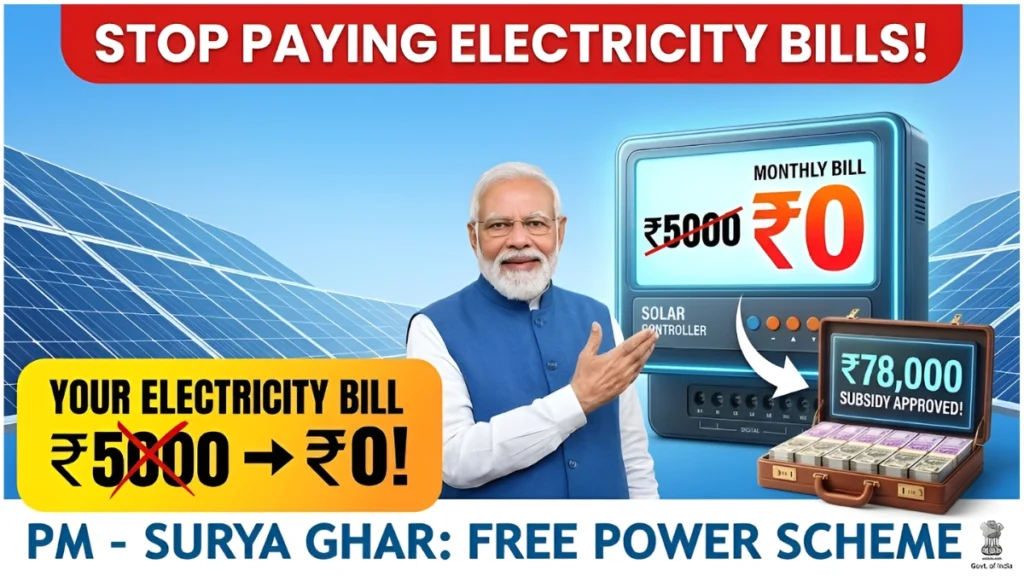
The Solar Rooftop Subsidy 2026 is opening doors for millions of Indian households to embrace clean energy at an affordable cost. With government support of up to ₹78,000, families can now install rooftop solar systems without worrying about heavy upfront expenses. This initiative is more than a financial scheme—it’s a movement toward energy independence, lower bills, and a greener lifestyle. Let’s explore how this program works, why it matters, and how you can benefit from it.
Affordable solar for middle class families
For years, rooftop solar was seen as expensive and out of reach for average households. The 2026 subsidy changes that narrative by covering a large portion of installation costs. Middle‑class families, who often juggle rising expenses, can now invest in solar without financial strain. By reducing the entry barrier, the scheme ensures that clean energy is no longer a privilege but a practical choice for everyday homes across India.
Instant savings on monthly bills
Electricity bills have been climbing steadily, putting pressure on household budgets. With rooftop solar, the difference is visible from the first month. Families generate their own electricity, reducing dependence on grid supply. In many cases, bills drop by 40–60 percent, depending on usage. Over the years, these savings accumulate into lakhs of rupees, making solar one of the smartest financial decisions for households looking to cut recurring costs.
Hassle free online application
The government has simplified the process to encourage participation. Applications can be submitted online through official portals, where households can check eligibility, select certified vendors, and track progress. The digital system reduces paperwork and speeds up approvals. Once cleared, installation is handled by trained professionals, ensuring safety and efficiency. This streamlined approach makes the subsidy accessible to everyone, even those unfamiliar with complex government procedures.
Reliable power during blackouts
Power cuts remain a challenge in many parts of India, especially rural areas. Rooftop solar offers a dependable solution by generating electricity directly at home. When paired with battery storage, households can keep lights, fans, and essential appliances running during outages. This reliability adds immense value, giving families peace of mind and reducing dependence on unpredictable grid supply.
Cleaner energy for a healthier planet
Every unit of solar energy replaces electricity generated from coal or other fossil fuels. By adopting rooftop solar, households reduce carbon emissions and contribute to cleaner air. This shift supports India’s climate goals and helps combat global warming. Families not only save money but also play a role in protecting the environment for future generations. It’s a lifestyle choice that combines financial benefits with social responsibility.
Long term investment with strong returns
Solar panels are built to last, often with warranties of 20–25 years. That means a one‑time investment continues to deliver returns for decades. With subsidies covering a large portion of costs, the payback period is shortened significantly. Families enjoy consistent savings year after year, making solar one of the most rewarding investments available today. Unlike many household purchases, solar panels keep adding value long after installation.
Empowering rural households
The subsidy is not limited to urban areas—it’s equally transformative for rural communities. In villages where electricity supply is irregular, rooftop solar provides reliable power for homes, schools, and small businesses. This empowerment boosts productivity, supports education, and improves quality of life. By bridging the energy gap, the program ensures that rural India is not left behind in the clean energy revolution.
Driving India’s renewable energy mission
India has set ambitious targets for renewable energy adoption, and rooftop solar plays a crucial role in achieving them. The subsidy program aligns with national goals to reduce carbon emissions and expand clean energy capacity. By encouraging households to participate, the government is building momentum toward a sustainable energy future. Each installation contributes to the larger mission of making India a global leader in renewable power.
Financial freedom for families
The subsidy is more than an energy initiative—it’s a tool for financial empowerment. By reducing monthly expenses, families free up resources for education, healthcare, and other priorities. The savings act as a cushion against inflation and rising utility costs. For many households, this financial stability is transformative, offering greater freedom and security. Solar energy becomes more than a technology—it becomes a pathway to economic resilience.
Boosting local employment opportunities
The widespread adoption of rooftop solar also creates jobs. Certified vendors, installers, and maintenance providers benefit from increased demand. This growth supports local economies and provides skilled employment opportunities. By investing in solar, households indirectly contribute to job creation, strengthening India’s workforce while embracing sustainable energy.
Conclusion
The Solar Rooftop Subsidy 2026 is a landmark initiative that combines affordability, sustainability, and empowerment. With support of up to ₹78,000, households can embrace clean energy, cut electricity bills, and enjoy reliable power for decades. The program is simple to access, impactful from day one, and aligned with India’s renewable energy mission. For families across the nation, this is the perfect moment to make the switch to solar and secure a brighter, greener future.
